
The Xapi Community is a vibrant network of Xapi Platform users from around the globe: collaborating, innovating, and advancing together towards a more robust API design and governance ecosystem.

Copyright © 2026 X-Venture. All Rights Reserved.

Nithmi Onara
24 January 2024
|6 min read
RESTful APIs have become the backbone of modern web development, enabling seamless communication between client applications and server resources. One common challenge developers face is how to handle partial updates efficiently while ensuring data integrity. In this blog, we will explore strategies for supporting partial updates in RESTful APIs, allowing developers to optimize resource modifications without compromising data consistency.
Partial updates involve updating only a subset of fields of an API resource' rather than the entire resource. This can be particularly useful when dealing with large or complex objects, as it reduces the amount of data transmitted and minimizes the risk of overwriting unintended changes.
Sending only the modified fields conserves bandwidth, especially crucial in scenarios with limited network resources.
Partial updates minimize the processing load on the server by focusing on the specific changes rather than reprocessing the entire resource.
For large datasets, partial updates result in faster response times and improved client-server interactions.
Partial updates in RESTful APIs can be supported using the following ways.
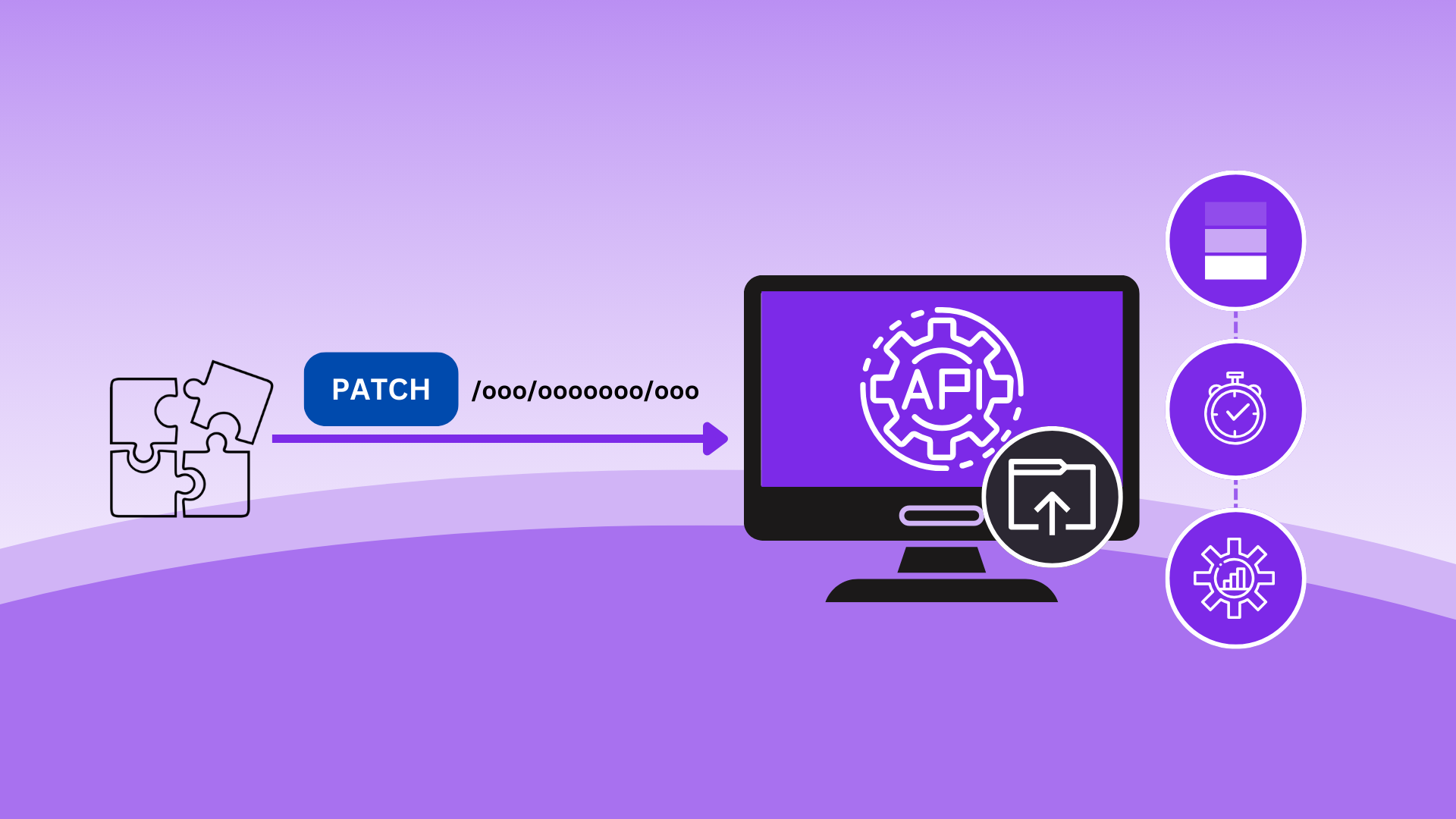
Leverage the HTTP PATCH method for partial updates. Here's an example in Python using Flask:
@app.route('/update_resource', methods=['PATCH']) def update_resource(): # Retrieve resource ID from the request resource_id = request.args.get('id')
# Retrieve the partial update data
partial_data = request.get_json()

return 'Resource updated successfully', 200
JSON Merge Patch is a standardized format for expressing partial updates. It can be applied to a JSON document using the following example:
{
"op": "replace",
"path": "/property",
"value": "new value"
}
The HTTP PATCH method is specifically designed for partial updates. It allows clients to send only the changes they want to apply to the server. When a PATCH request is received, the server processes the modifications, updating only the specified fields while leaving others unchanged.
Example:
PATCH /api/resource/123
Content-Type: application/json
{
"field1": "new value",
"field3": 42
}
This method ensures that only the specified fields are updated, preserving data integrity.
Use conditional requests, such as If-Match or If-None-Match headers, to ensure that the resource being updated is still in the expected state. If the resource has been modified since the client last retrieved it, the server can reject the update, preventing unintentional changes.
Example:
PATCH /api/resource/123
Content-Type: application/json
If-Match: "etag_of_the_resource"
{
"field1": "new value",
}
If the resource has changed since the client retrieved it, the server will respond with a ‘412 Precondition Failed’ status.
Implement resource versioning to track changes over time. Each resource carries a version identifier, and clients include this identifier when making updates. If the client's version doesn't match the server's, the update is rejected.
Example:
PATCH /api/resource/123
Content-Type: application/json
X-Resource-Version: 2
{
"field1": "new value",
}
This approach ensures that updates are applied only if the client is working with the latest version of the resource.
For resources with relationships or dependencies between fields, consider using atomic updates. This involves updating multiple fields in a single operation, ensuring consistency across related data.
Example:
PATCH /api/resource/123
Content-Type: application/json
{
"field1": "new value",
"field2": "updated value"
}
The server processes both field updates as a single atomic operation, preventing inconsistencies.
Handling partial updates in RESTful APIs is a crucial aspect of designing robust and efficient systems. By employing strategies like the PATCH method, conditional requests, versioning, and atomic updates, developers can strike a balance between data integrity and efficient resource modifications. Choosing the right approach depends on the specific requirements of the application, ensuring a smooth and reliable API experience for both clients and servers.

API Design
In today's rapidly evolving digital landscape, organizations are constantly striving to accelerate development, enhance their offerings, and maintain a competitive edge. A critical, yet often overlooked, aspect of achieving these goals lies in the ability to truly see and understand digital assets.

Prabath Ariyarathna
13 February 2026
Read More
API Design
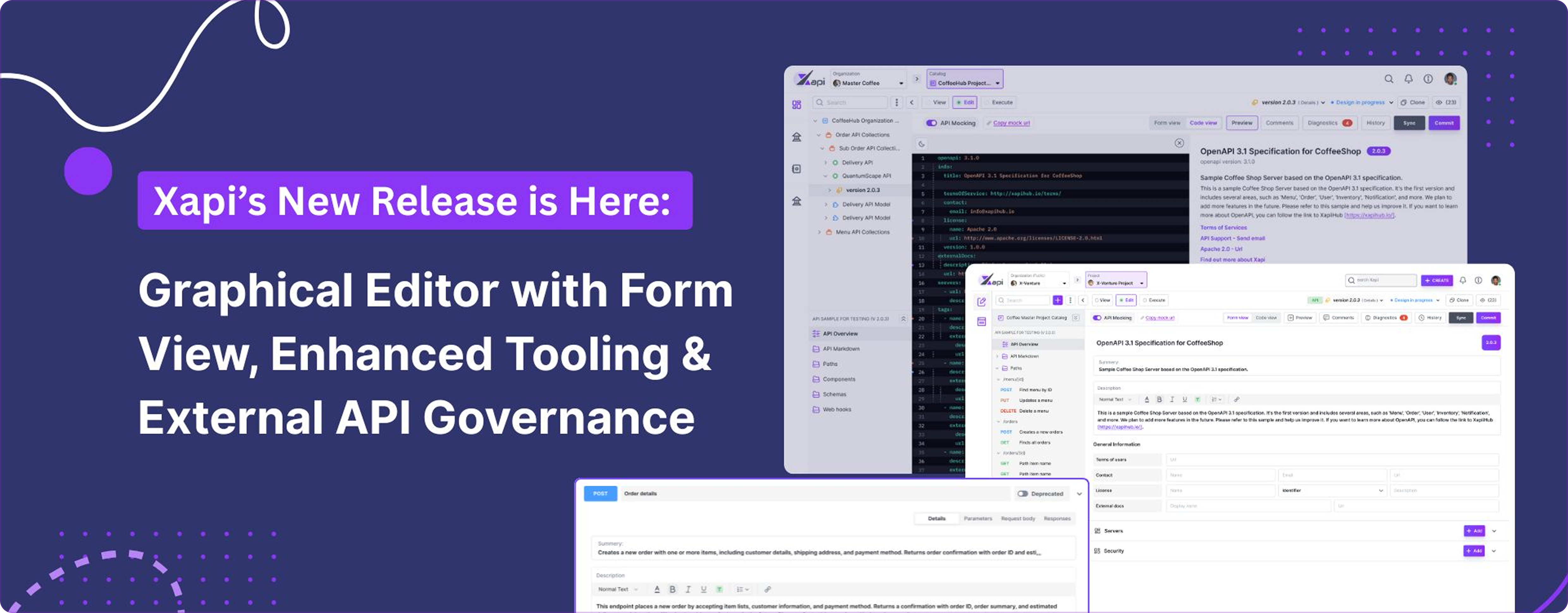
We're thrilled to unveil our latest Xapi platform update, bringing a more intuitive API design experience, tooling enhancements, and a smarter way to govern externally designed APIs. These new capabilities make API design and governance more accessible, more powerful, and more flexible than ever before.

Shamali Sathindra
8 April 2025
Read More

API Design
Every organization wants well-designed APIs, but the key is turning business needs into carefully crafted APIs that perfectly match their main business objectives.
Prabath Ariyarathna
17 February 2025
Read More


