
The Xapi Community is a vibrant network of Xapi Platform users from around the globe: collaborating, innovating, and advancing together towards a more robust API design and governance ecosystem.


Copyright © 2026 X-Venture. All Rights Reserved.

Shirantha Jayasooriya
04 October 2023
|7 min read
In the world of web development, designing robust and reliable RESTful APIs is crucial for creating successful applications. A significant aspect of building such APIs is handling errors effectively. In this blog post, we'll delve into the best practices for designing error responses and handling errors in RESTful APIs. Whether you're a seasoned developer or just getting started, understanding these principles will help you create APIs that are more user-friendly, maintainable, and secure.
Before we start to explore the error handling techniques, let’s first try to understand the importance of error handing in REST APIs
Error handling in RESTful APIs plays a vital role in enhancing the overall user experience. When something goes wrong, users and developers need clear and informative error messages to understand the issue. A well-designed error response should guide them on how to rectify the problem.
Security is a paramount concern in web development. Inadequate error handling can lead to information leakage, potentially exposing sensitive data or revealing details about the API's internal workings. Proper error handling prevents such security vulnerabilities.
Consistent error handling practices contribute to the maintainability of your API codebase. They make your code easier for other developers to understand and collaborate on. This is especially important when working on team projects or maintaining APIs over time.
Now that we have a clear idea of the importance of error handing in REST APIs, let’s explore error response designing.
Following are some best practices to consider when designing error responses in REST APIs.
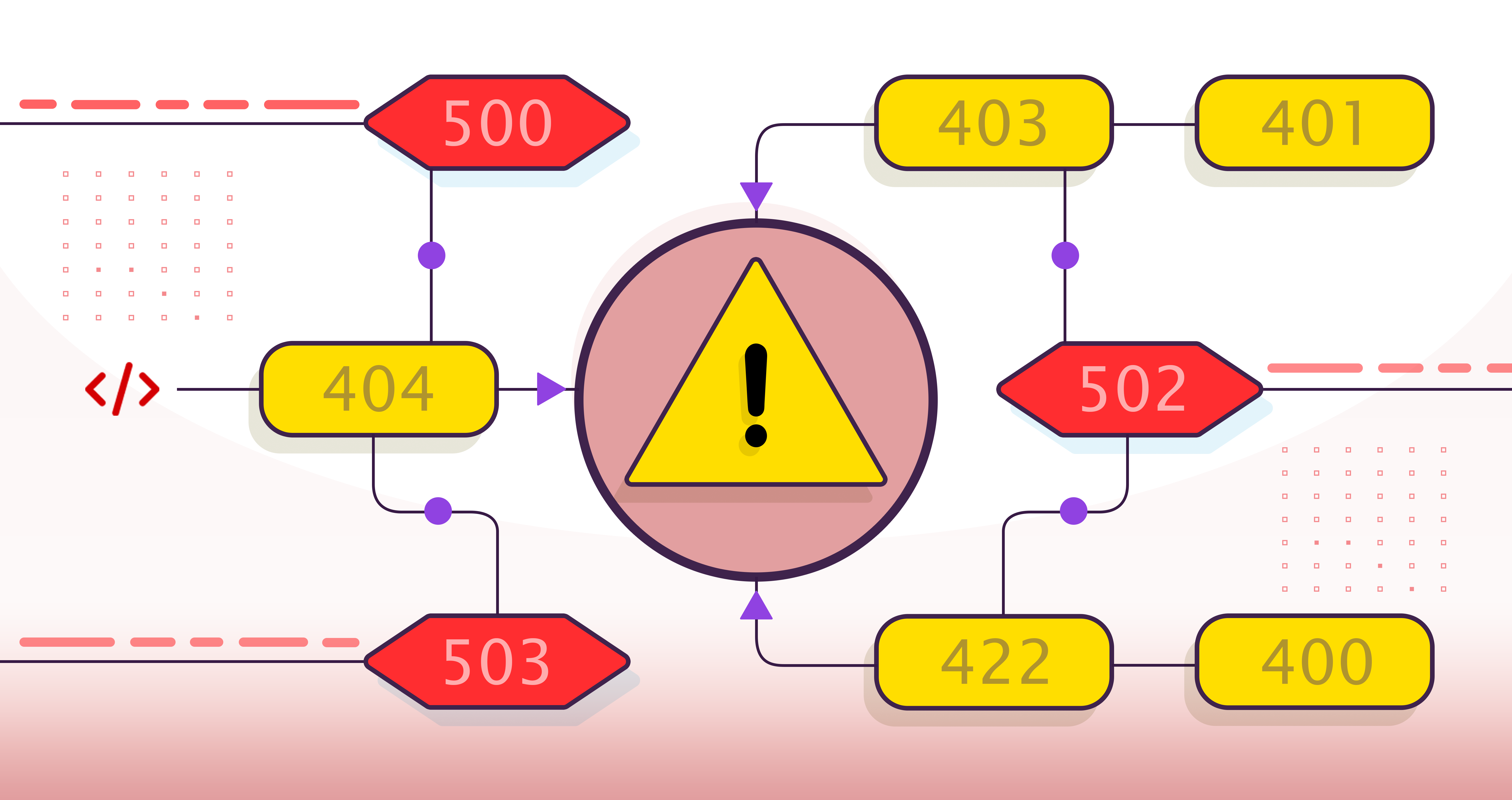
HTTP status codes are an integral part of RESTful API design and convey the outcome of a request. Here's a more detailed breakdown of common status codes:
200 OK: Indicates a successful request.
400 Bad Request: The client sent a malformed request, such as missing or incorrect parameters.
401 Unauthorized: Authentication failure; the user is not authenticated or lacks valid credentials.
403 Forbidden: The client is authenticated but does not have permission to access the resource.
404 Not Found: The requested resource could not be found.
500 Internal Server Error: The server encountered an unexpected error. Avoid using it excessively; more specific error codes are preferable when possible.
Along with status codes, include clear and informative error messages in the response body. Messages should explain what went wrong and ideally guide users toward resolving the issue.
Example:
{
  "error": "Invalid input: Missing 'email' parameter."
}
Assigning unique error codes to specific error scenarios helps developers identify, debug, and handle issues programmatically. Always include both the error code and a human-readable message.
Example:
{
  "error_code": "E001",
  "error_message": "Invalid input: Missing 'email' parameter."
}
Provide a dedicated section in your API documentation listing all error codes, their meanings, and potential solutions. This makes debugging easier and reduces support requests while improving developer satisfaction.
Let’s learn how to effectively handle errors in REST APIs!
Implement a centralized error handling mechanism within your API. This can be achieved through middleware or a dedicated error handling component. Centralization ensures uniform error processing and simplifies maintenance.
Logging errors is essential for debugging and monitoring your API in production environments. Log relevant information such as error codes, timestamps, user IDs, and stack traces. This information aids in diagnosing and resolving issues swiftly.
Ensure that error messages do not inadvertently reveal sensitive information about your server infrastructure or internal implementation. Craft error messages to be informative without disclosing unnecessary details.
To protect your API from abuse or overuse, consider implementing rate limiting and throttling mechanisms. When users or clients exceed their allocated limits, return an appropriate error response (e.g., 429 Too Many Requests) to encourage responsible usage.
In some situations, it's beneficial to implement graceful degradation. This means that when facing non-critical errors, your API can provide partial responses or fallback data instead of failing the entire request. This strategy improves the user experience when a full response is not possible.
In conclusion, error handling and error response design are foundational aspects of RESTful API development. Implementing the best practices outlined above will help you create APIs that are user-friendly, secure, and maintainable. Keep in mind that error handling is an ongoing process that requires regular review and improvement as your API evolves. Prioritize error handling to ensure a seamless and reliable user experience for your API consumers.

API Design
In today's rapidly evolving digital landscape, organizations are constantly striving to accelerate development, enhance their offerings, and maintain a competitive edge. A critical, yet often overlooked, aspect of achieving these goals lies in the ability to truly see and understand digital assets.

Prabath Ariyarathna
13 February 2026
Read More
API Design
We're thrilled to unveil our latest Xapi platform update, bringing a more intuitive API design experience, tooling enhancements, and a smarter way to govern externally designed APIs. These new capabilities make API design and governance more accessible, more powerful, and more flexible than ever before.

Shamali Sathindra
8 April 2025
Read More

API Design
Every organization wants well-designed APIs, but the key is turning business needs into carefully crafted APIs that perfectly match their main business objectives.
Prabath Ariyarathna
17 February 2025
Read More


