
The Xapi Community is a vibrant network of Xapi Platform users from around the globe: collaborating, innovating, and advancing together towards a more robust API design and governance ecosystem.

Copyright © 2026 X-Venture. All Rights Reserved.


Amani Vidanage
07 May 2024
|6 min read
Application Programming Interfaces, or APIs, are a fundamental component of software development in the digital age. This makes it possible for many systems and services to integrate and communicate with each other smoothly. A commonly used standard for defining RESTful APIs, the OpenAPI Specification (OAS), is always evolving to satisfy the increasing needs of developers and enterprises. The OAS has undergone substantial improvements and adjustments with the introduction of version 3.1, enabling developers to construct reliable, compatible, and thoroughly documented APIs. This in-depth blog will examine some of the new features included in OAS version 3.1, diving further into the modifications made in comparison to version 3.1's predecessor and offering helpful advice on how to write API specifications that utilize OAS.
At its core, the OAS is a machine-readable format for describing RESTful APIs. It provides a standardized way to document various aspects of an API, including its structure, endpoints, parameters, responses, authentication mechanisms, and more. By adopting the OAS, developers can simplify the API development process and enhance the overall quality and usability of their APIs.
Version 3.1 of the OAS brings several key features and changes, building upon the foundation laid by its predecessor, version 3.0. Let's explore some of the notable changes introduced in version 3.1:
Version 3.1 aligns with the latest JSON Schema Draft 2020-12, offering improved support for data validation and schema definition.
Developers can use the advanced features of JSON Schema, such as additional validation keywords and constraints, to define the structure and constraints of request and response payloads more precisely.
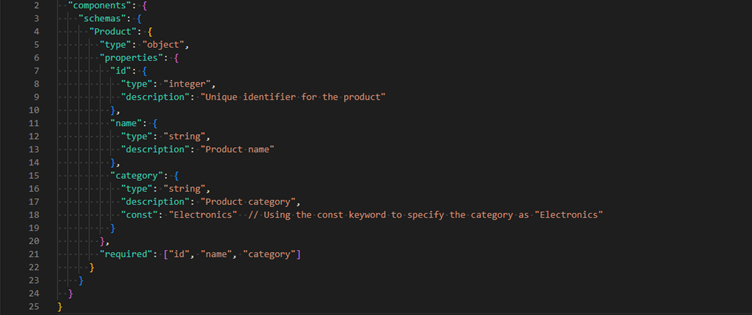
The jsonSchemaDialect top-level field is added to allow the definition of a default '$schema' value for Schema Objects.
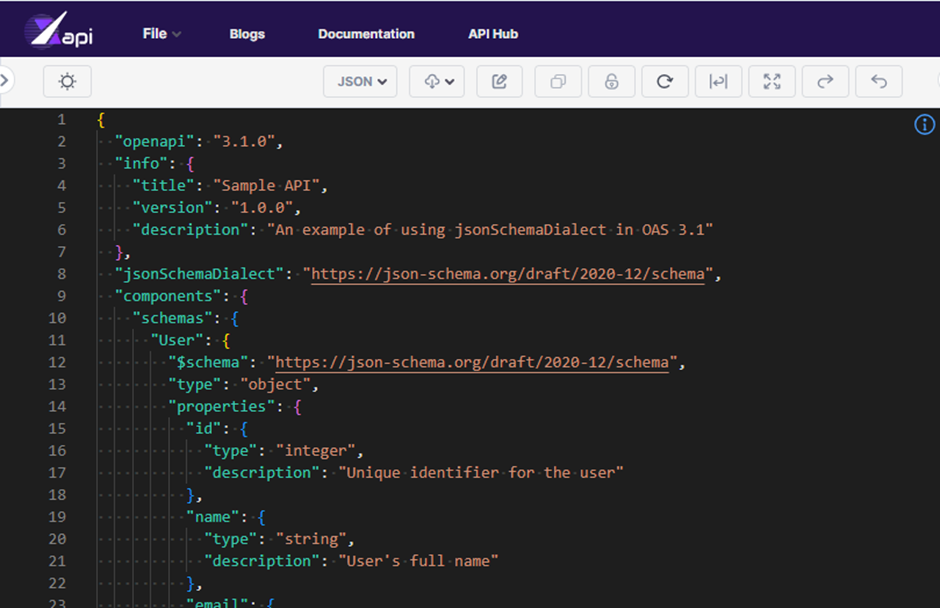
Version 3.1 introduces refinements to security definitions, allowing developers to specify authentication and authorization mechanisms more granularly.
Support for OAuth 2.1, an updated version of the OAuth 2.0 protocol, provides enhanced security capabilities and clearer guidelines for implementing OAuth-based authentication in APIs.

The latest specification enhances support for linking and referencing components within API definitions, improving organization, reusability, and modularity.
Developers can utilize features such as $ref pointers and inline schema definitions to create more maintainable and scalable API designs, reducing redundancy and promoting consistency across API definitions.
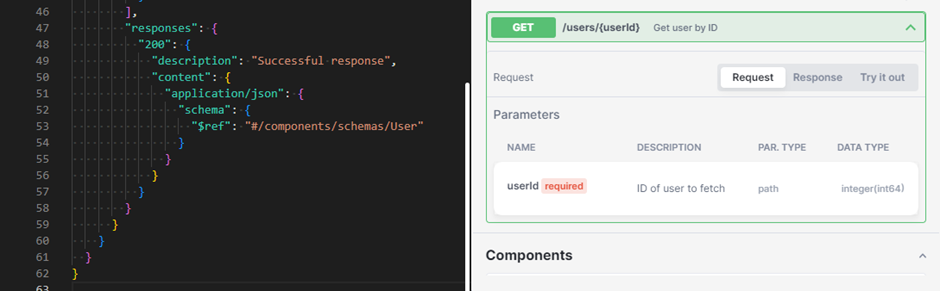
In OAS version 3.1, the introduction of the webhooks top-level field allows API designers to specify out-of-band webhook endpoints within the API documentation. This feature enables the description of webhook URLs, supported events, request and response formats, and authentication requirements, enhancing the documentation and interoperability of APIs.
Now that we have explored the changes introduced in OAS version 3.1, let's dive into the practical aspects of writing API specifications using this version:
Start by outlining the structure and functionality of your API, identifying endpoints, request parameters, response formats, authentication requirements, and other relevant details. The syntax of OAS version 3.1 can be used to describe each component of your API comprehensively, focusing on clarity, consistency, and maintainability.
Take advantage of the enhanced support for JSON Schema in version 3.1 to define the structure and constraints of request and response payloads. Utilize additional validation keywords and constraints provided by JSON Schema Draft 2020-12 to ensure data consistency, integrity, and compliance with business requirements.
Define security schemes and requirements with precision, considering the authentication and authorization mechanisms appropriate for your API. Incorporate OAuth 2.1 for secure and standardized authentication, following best practices and guidelines outlined in the specification.
Organize your API definitions effectively by leveraging features such as $ref pointers and inline schema definitions to promote reusability and modularity. Utilize linking mechanisms to establish relationships between components, reducing duplication and enhancing the maintainability of your API specifications.
Utilize callbacks and webhooks to support asynchronous API interactions, enabling real-time communication and event-driven workflows.
Define callback operations and webhook endpoints to handle asynchronous events seamlessly, ensuring reliability and responsiveness in your API architecture.
OAS version 3.1 represents a significant milestone in the evolution of API documentation and design standards, offering developers enhanced features and capabilities to create interoperable, and well-documented APIs. By understanding the key changes introduced in version 3.1 and using its advanced features effectively, developers can write comprehensive API specifications that meet the evolving needs of users and organizations. Start designing your APIs following OAS version 3.1 and unlock the potential to design APIs that drive innovation.
Share Article

API Design
In today's rapidly evolving digital landscape, organizations are constantly striving to accelerate development, enhance their offerings, and maintain a competitive edge. A critical, yet often overlooked, aspect of achieving these goals lies in the ability to truly see and understand digital assets.

Prabath Ariyarathna
13 February 2026
Read More
API Design
We're thrilled to unveil our latest Xapi platform update, bringing a more intuitive API design experience, tooling enhancements, and a smarter way to govern externally designed APIs. These new capabilities make API design and governance more accessible, more powerful, and more flexible than ever before.

Shamali Sathindra
8 April 2025
Read More

API Design
Every organization wants well-designed APIs, but the key is turning business needs into carefully crafted APIs that perfectly match their main business objectives.
Prabath Ariyarathna
17 February 2025
Read More


