
The Xapi Community is a vibrant network of Xapi Platform users from around the globe: collaborating, innovating, and advancing together towards a more robust API design and governance ecosystem.

Copyright © 2026 X-Venture. All Rights Reserved.


Prabath Ariyarathna
18 February 2026
|3 min read
I've seen a common problem: we empower our teams for speed and autonomy, only to tie them up with layers of governance. The old choice was between rigid, top-down control and a messy, uncoordinated freedom. Neither works. There's a better way to scale: federated governance. It's about empowering teams while maintaining a unified strategy.
Fragmented governance — where data, APIs, security, and AI each have their own separate rules and tools — creates serious friction. It's a problem I've personally dealt with. I remember one project where we spent weeks waiting for approvals from disconnected governance teams. This approach doesn't just add bureaucracy; it actively harms our business.
When governance is in silos, you can't see how a data privacy issue in one team connects to a security vulnerability in another. We lose the ability to manage risk holistically.
Our teams are forced to navigate multiple, often conflicting, processes. This adds complexity and slows down our ability to innovate and deliver.
All this friction from disconnected processes and tools leads to a significant slowdown in product development and delivery.
One effective approach to this problem is a federated governance model, which balances centralized direction with decentralized action. A central team sets the high-level policies and standards. From there, individual product teams and sub-organizations have the authority to manage their own specific governance needs. This model allows for both freedom and consistency. Teams are trusted to make their own decisions within a clear framework. This isn't about creating new rules in a vacuum; it's about adapting a unified strategy to their specific work.
The people closest to the work are in the best position to govern it. This model increases ownership and accountability.
By providing a shared framework, we avoid the costly and redundant work of different business units trying to solve the same governance problems on their own.
By removing the need for a central team to approve every single decision, we eliminate a major bottleneck and allow teams to move much faster.
A federated model will fail if it's not supported by the right technology. Using different tools for data, API, and AI governance will inevitably lead to the very fragmentation you're trying to avoid. The most effective solution is an integrated platform that provides a single, unified view across all governance domains. This allows our governance team to see a complete picture of our digital assets and processes — from data pipelines to API endpoints. This unified visibility not only streamlines compliance but gives us a competitive advantage by allowing the entire organization to operate as a single, cohesive unit.
Ultimately, scaling governance isn't a choice between control or chaos. It's about building a federated framework that trusts and empowers our teams to act independently while keeping them aligned with our overall mission. It's about managing everything together to improve visibility and accelerate our journey to success.
Share Article

API Design
In today's rapidly evolving digital landscape, organizations are constantly striving to accelerate development, enhance their offerings, and maintain a competitive edge. A critical, yet often overlooked, aspect of achieving these goals lies in the ability to truly see and understand digital assets.
Prabath Ariyarathna
13 February 2026
Read More
API Design
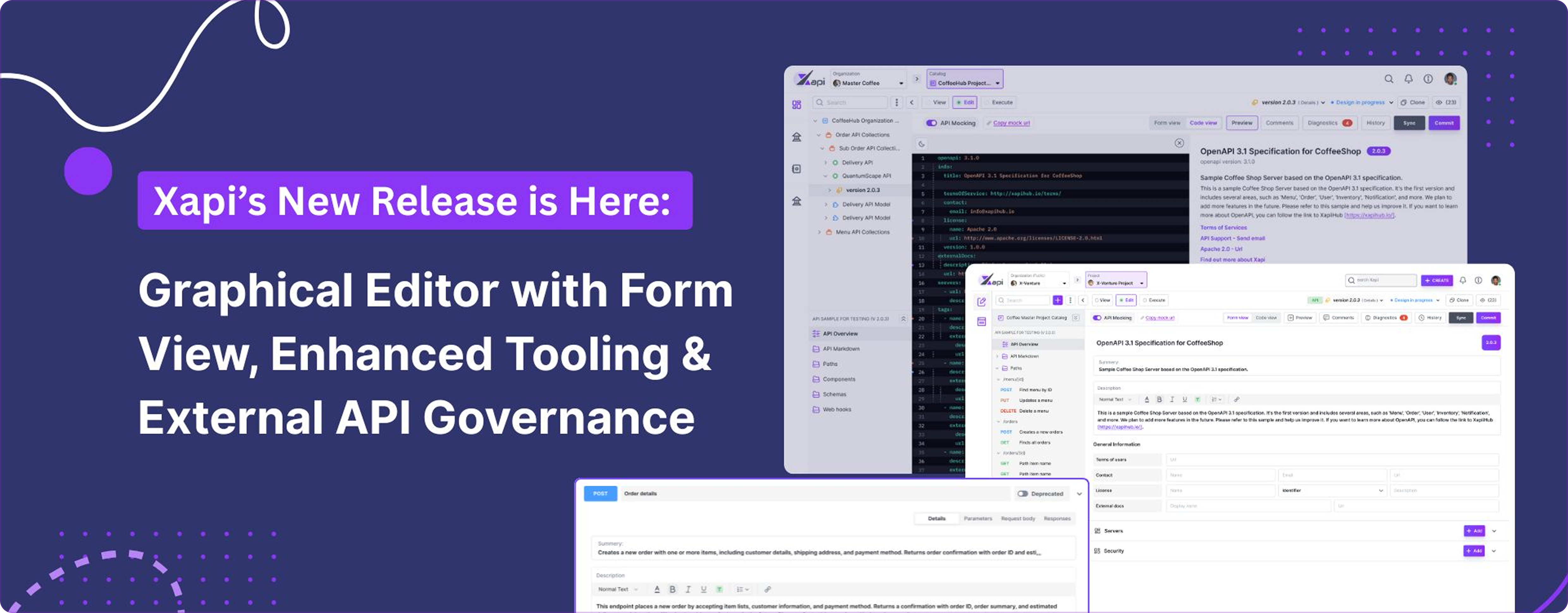
We're thrilled to unveil our latest Xapi platform update, bringing a more intuitive API design experience, tooling enhancements, and a smarter way to govern externally designed APIs. These new capabilities make API design and governance more accessible, more powerful, and more flexible than ever before.

Shamali Sathindra
8 April 2025
Read More

API Design
Every organization wants well-designed APIs, but the key is turning business needs into carefully crafted APIs that perfectly match their main business objectives.
Prabath Ariyarathna
17 February 2025
Read More


