
The Xapi Community is a vibrant network of Xapi Platform users from around the globe: collaborating, innovating, and advancing together towards a more robust API design and governance ecosystem.

Copyright © 2026 X-Venture. All Rights Reserved.


Farvin Lukman
22 May 2024
|3 min read
In today's digital landscape, application programming interfaces (APIs), are known to be the backbone of technological advancements. They help various software systems to communicate and pass information from one application to another. However, designing APIs can be a complex process, and it's easy to get carried away with technical details and forget about the end-user experiences.
56% of the developers believe that APIs contribute to the enhancement of their products. In this article, let's discuss the best practices for designing APIs with a user-centric approach.
It is obviously clear that you need to place yourself in that of the user and think about what that user wants to do with the API, and how it can facilitate that journey.
It is with this information that you will be able to design an API that will not only help to verify that it is meeting the target users' needs and requirements but also ensures an enhanced user experience.
Complex systems that are difficult to use can be ineffective as it makes it harder for developers to integrate the API into applications. Hence, keeping the API simple and straightforward enhances the user experience while saving developers time and effort.
An API that is consistent saves developer time as it is easy to understand and use, it minimizes the learning curve. In API development, it is necessary to use the same syntax for naming and responses across the whole system as well as be precise and accurate about the error messages.
Well composed API documentation aids developers in developing familiarity with how to use the API and debugging when difficulties arise. A good user manual should be user-friendly, clear, concise, and constantly updated.
As APIs are widely used, they therefore possess access for important software functions and data, making APIs a prime target for attackers and cyber threats. A compromised, exposed, or hacked API can expose personal data, financial information, or other sensitive data. Hence, organizations must ensure that regular API testing is performed to identify the vulnerabilities. By implementing robust security measures to protect against possible threats, they can foster user trust.
In summary, prioritizing user-centricity in API design ensures that the APIs are easy to use, consistent, and secure for developers and end-users alike to work on. This leads to an improved user experience.
Xapi's user-friendly interface and extensive features makes it an ideal platform for designing APIs that meet user requirements and satisfy customer needs.
Start designing user-friendly APIs with Xapi today!

API Design
In today's rapidly evolving digital landscape, organizations are constantly striving to accelerate development, enhance their offerings, and maintain a competitive edge. A critical, yet often overlooked, aspect of achieving these goals lies in the ability to truly see and understand digital assets.

Prabath Ariyarathna
13 February 2026
Read More
API Design
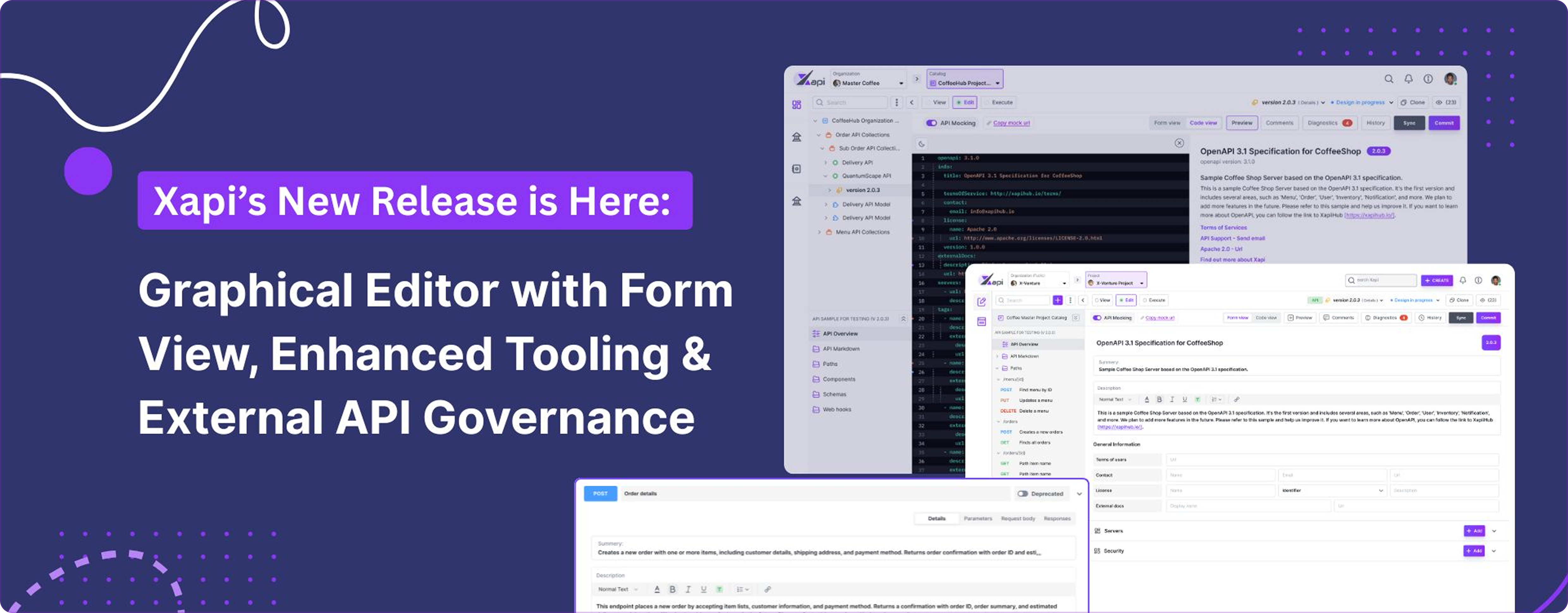
We're thrilled to unveil our latest Xapi platform update, bringing a more intuitive API design experience, tooling enhancements, and a smarter way to govern externally designed APIs. These new capabilities make API design and governance more accessible, more powerful, and more flexible than ever before.

Shamali Sathindra
8 April 2025
Read More

API Design
Every organization wants well-designed APIs, but the key is turning business needs into carefully crafted APIs that perfectly match their main business objectives.
Prabath Ariyarathna
17 February 2025
Read More


