
The Xapi Community is a vibrant network of Xapi Platform users from around the globe: collaborating, innovating, and advancing together towards a more robust API design and governance ecosystem.

Copyright © 2026 X-Venture. All Rights Reserved.

Prabath Ariyarathna
20 December 2023
|11 min read
In organizations, how mature their API programs are depends on the current strategy, no matter how they choose to implement it. Recognizing where their API program stands is super important. It’s like the starting point for smart planning, guiding what they need to achieve and how they plan their activities.
Knowing the current maturity level of API programs isn’t just a small step; it’s a big deal. It’s a guide for looking back at what they’ve done and planning for the future. It helps see how well their current strategies are working and spots where they can do better and try new things.
As technology keeps changing, the connection between their big goals and how mature their API programs are becomes clear. This shows why everyone in the organization, from tech folks to top managers, needs to be on the same page.
In conclusion, recognizing how important it is to match the API program’s maturity with the organization’s strategy is key. It’s an ongoing thing, part of how the organization works. Together, this clear understanding helps them plan well, making sure their actions line up with big goals and set them up for success in the future.
Characteristics: At this level, there is no formal API strategy or plan in place. APIs are developed reactively, addressing immediate needs and retrieving specific data on an as-needed basis.
Focus: The emphasis is on fulfilling immediate requirements through ad hoc solutions. There’s a lack of structured planning, and development is driven by the urgency of specific data retrieval needs.
Characteristics: APIs are developed in a project-centric manner to meet specific project requirements. However, there is limited standardization across projects, leading to inconsistencies in API design and documentation.
Focus: Basic project management practices are applied to API development, ensuring that APIs meet project-specific needs. However, the lack of comprehensive standardization can lead to challenges in scalability and consistency.
Characteristics: APIs are utilized for integration within specific departments or business units. There is some standardization in API design and documentation, providing a degree of consistency.
Focus: The emphasis shifts to defined processes and basic documentation to facilitate broader use. The goal is to extend the use of APIs beyond individual projects or departments while maintaining a level of consistency.
Characteristics: APIs are developed with a focus on broader enterprise integration. Quantitative metrics are employed to measure and control API performance, ensuring a more data-driven approach.
Focus: Standardized processes and metrics are implemented for API development and integration across the organization. The emphasis is on ensuring consistency, scalability, and performance measurement.
Characteristics: APIs are recognized as strategic assets for external integration. Continuous improvement becomes a priority, and APIs are actively used for innovation within the organization.
Focus: The organization places a strong emphasis on continuous optimization and innovation in API development. APIs play a central role in strategic initiatives, fostering collaboration and driving innovation both internally and externally.
Characteristics: APIs are treated as products, with dedicated teams and resources allocated to their development and maintenance. Monetization strategies, such as API marketplaces or subscription models, are implemented.
Focus: APIs are designed not only for functionality but also for market appeal. Business models include various monetization strategies, transforming APIs into revenue-generating assets. There’s a strong focus on customer satisfaction and market competitiveness.
Understanding the API program maturity level is crucial for aligning initiatives with broader business goals. It helps streamline workflows, maintain consistency, and allocate resources effectively. Metrics ensure ongoing improvement while recognizing APIs as strategic assets supports overall business growth. Embracing innovation and adaptability contributes to a dynamic organizational culture. Vigilance in risk management and resource optimization safeguards operations, positioning the organization for success in the evolving digital landscape.
Identifying an organization’s API program maturity level is a structured process involving criteria definition, stakeholder engagement, and data collection to assess various aspects of API development and integration. Using an assessment framework and mapping data to predefined maturity levels, organizations can pinpoint their current state. Refinement comes through gap analysis and stakeholder feedback, leading to the development of an improvement roadmap. Prioritized initiatives are implemented to advance to the next maturity level. Continuous monitoring, feedback gathering, and periodic iterations ensure ongoing alignment with evolving business goals and industry standards. This strategic approach fosters enhanced efficiency, consistency, and innovation in API programs, contributing to the organization’s success in the dynamic digital landscape.
The primary reasons organizations often fall short in advancing their API programs lie in a lack of strategic planning and a limited understanding of the opportunities inherent in doing so. Many still perceive APIs merely as integration mechanisms with external systems, failing to recognize their broader potential. This limited perspective hampers the strategic elevation of API program maturity. However, considering the diverse business scenarios, there exists untapped potential for organizations to step up their API program by strategically aligning them with overarching business objectives. By redefining the role of APIs beyond mere integration tools and grasping the various opportunities they present, organizations can unlock new avenues for innovation, efficiency, and overall program maturity.
This involves formulating comprehensive strategies not only for the development phase but for the entire lifecycle of the API program. Beyond technical considerations, it encompasses strategic planning for the initiation, design, development, deployment, maintenance, and eventual retirement of APIs. It emphasizes aligning API initiatives with overarching business goals, identifying key use cases, ensuring scalability and security, and devising a roadmap for ongoing success. The goal is to create a holistic strategy that considers the entire lifecycle of the API program, fostering adaptability and sustainability over time.
This points towards fostering a cultural change within the organization where APIs are recognized and treated with the same importance as core business assets. It involves creating awareness about the strategic value of APIs, promoting collaboration between technical and business teams, and instilling a mindset that considers APIs as fundamental components driving innovation and efficiency. This cultural shift helps maximize the potential of APIs across various departments.
Encouraging the business to explore unconventional opportunities involves thinking beyond traditional API use cases. This could include leveraging APIs for new revenue streams, entering partnerships, or creating innovative products and services. It requires a proactive approach to identify and capitalize on opportunities that might not be immediately apparent, aligning business needs with the transformative potential of APIs.
Establishing a proper organizational structure for API management involves defining roles, responsibilities, and workflows. It includes creating dedicated teams responsible for API development, maintenance, and governance. Additionally, using the right tools to support the API program is crucial. This involves selecting tools for API design, documentation, testing, monitoring, and analytics. A well-defined structure and the right tools contribute to the overall effectiveness and efficiency of the API program.
Elevating an API program to a higher level involves treating APIs as first-class citizens within the organizational landscape. This approach signifies recognizing the strategic importance of APIs and integrating them seamlessly into the core operations and decision-making processes. By adopting an “API-first” design approach, organizations prioritize the careful planning and design of APIs before actual development begins. This shift in methodology ensures that APIs are not merely functional components but integral strategic assets contributing to the organization’s success.

The API-first design approach, in essence, means that APIs are at the forefront of the development lifecycle. It involves thoughtful consideration of API design, documentation, and functionality as primary elements, setting the stage for a robust and purpose-driven API program. Embracing this approach allows organizations to identify APIs as pivotal components that can drive innovation, efficiency, and overall business agility.
Xapi, as an API design platform, plays a crucial role in facilitating the implementation of the API-first approach. It provides tools and features that enable organizations to run the design aspects of this approach effectively. From comprehensive design capabilities to collaborative features and built-in testing functionalities, Xapi empowers organizations to strategically plan, prototype, and refine APIs before they are implemented. By leveraging Xapi, organizations can seamlessly integrate the API-first philosophy into their development processes, ensuring that APIs are not only functional but also strategically aligned with the broader goals of the organization. In this way, the API program becomes a key driver of innovation, adaptability, and overall success in the dynamic digital landscape.
Share Article

API Design
In today's rapidly evolving digital landscape, organizations are constantly striving to accelerate development, enhance their offerings, and maintain a competitive edge. A critical, yet often overlooked, aspect of achieving these goals lies in the ability to truly see and understand digital assets.

Prabath Ariyarathna
13 February 2026
Read More
API Design
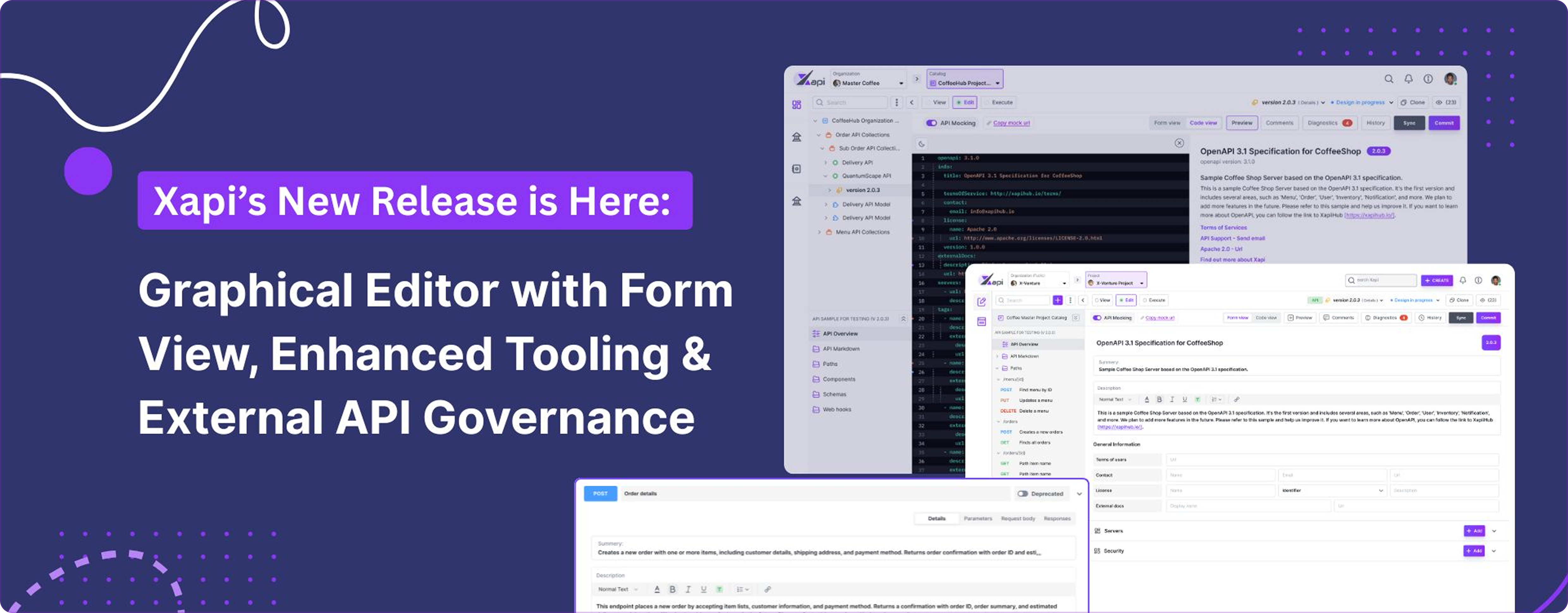
We're thrilled to unveil our latest Xapi platform update, bringing a more intuitive API design experience, tooling enhancements, and a smarter way to govern externally designed APIs. These new capabilities make API design and governance more accessible, more powerful, and more flexible than ever before.

Shamali Sathindra
8 April 2025
Read More

API Design
Every organization wants well-designed APIs, but the key is turning business needs into carefully crafted APIs that perfectly match their main business objectives.
Prabath Ariyarathna
17 February 2025
Read More


